Between the Bookings: A Ventilation Evidence File for Weekly-Use Community Buildings
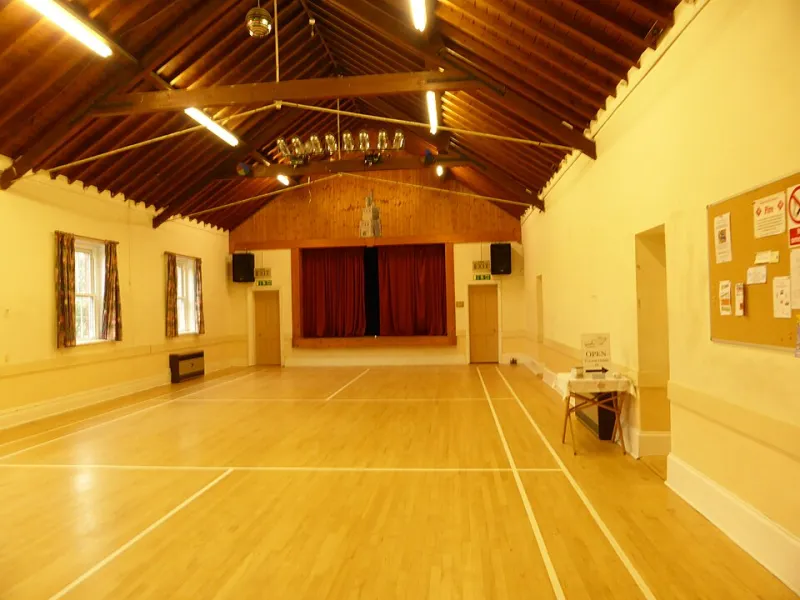
Photo: Bob Harvey , CC BY-SA 2.0, via Wikimedia Commons
A village hall can sit silent from Monday to Friday and then host a toddler group, a pilates class, a birthday party and a parish council meeting in the space of thirty-six hours. The air in the main room at nine in the morning is not the air that will be there at four in the afternoon. Most community buildings have no mechanical ventilation to commission, no building management system and no one on site holding a commissioning certificate. That does not remove the need for evidence; it changes the shape of it.
Why an empty-room reading proves very little
A carbon dioxide reading taken on a Tuesday morning in an unoccupied hall will sit close to outdoor levels. It confirms that the monitor works. It does not confirm that the hall will clear between a sixty-person quiz night and the next morning's booking. Ventilation evidence in these buildings is occupancy evidence. The useful record pairs a reading with context: how many people were present, what activity was taking place, which windows and doors were open, and for how long.
Start with occupancy, not equipment
Before any measurement, write down the patterns. A hall might have a regular toddler group with high occupant density and low activity, a pilates class with moderate density and higher respiration, a wedding reception with variable and evening occupancy, and a monthly film night with long duration and low turnover. For each, note the expected peak number, the room or rooms used, and whether the kitchen extractor runs. This occupancy schedule becomes the frame for every later reading. Without it, a number in a logbook has no reference point and cannot be defended.
A hire-triggered checklist
The most practical control in a volunteer-run building is a short checklist completed by the person who unlocks and the person who locks up. It should fit on one side of A4, be laminated, and live with the key safe or booking folder. It does not need to be technical. It needs to be repeatable.
- Before the hire: open the windows or vents specified for that room and season, confirm that any extract fan starts and runs, and switch on the carbon dioxide monitor if one is used.
- During the hire: if the room feels stuffy or the monitor shows a sustained rise, increase the opening area or purge the room briefly. Record the action rather than relying on memory.
- After the hire: close and secure openings, record the approximate peak occupancy, note whether the reading exceeded the locally agreed threshold, and report any faults such as a weak extractor or a window that will not stay open.
The checklist should name roles rather than individuals where possible: hall manager, booking secretary, caretaker, cleaner. The cleaner is often the last person in the building and the first to notice a failing extract fan. Give that person a route to report a fault, not a responsibility to repair it.
Spot readings that mean something
Small wall-mounted or handheld carbon dioxide monitors are inexpensive and widely used in community settings. A reading becomes evidence only when it is recorded with time, room, occupancy and openings. Take a reading at the start, at a mid-point and at the end of the event where practical. Use parts per million and record the monitor's location. Do not treat a single reading as proof of compliance. Look instead for pattern: does the room recover between hires, and does the end-of-event reading fall before the next group arrives? A hall that starts each booking at outdoor levels is ventilating successfully between uses, even if the peak during a busy event is high.
The seasonal opening regime
Opening windows in January is not the same as opening them in June. Build a simple matrix: season, typical occupancy, minimum opening position, and purge duration after the hire. In winter, short purge bursts with the heating off may be more effective and more acceptable to users than leaving windows ajar all day. In summer, early morning purge and overnight cooling can do more work than midday opening. Record any changes to the regime. If the boiler is serviced and the hall is cold, volunteers will close windows and the written regime will quietly fail unless the reason is recorded and the timetable adjusted.
Keeping the file proportionate
A community building does not need a full ventilation validation report. It needs a file that shows someone considered occupancy, openings and air quality and wrote it down. Keep it in one folder: the occupancy schedule, the checklist template, completed checklists for the last twelve months, the spot reading log, maintenance records for extract fans and monitors, and a note of the seasonal opening regime. Trustees should review the file quarterly and after any event where the room felt uncomfortable.
When to escalate
If readings remain high at the end of events despite openings, if an extract fan is noisy or weak, or if condensation and mould appear on cold surfaces, the building may need a ventilation assessment by a competent person. That is not a failure of the volunteer regime. It is the regime doing its job by producing a question worth answering. The hall's ventilation is managed in the ten minutes before a hire and the ten minutes after. The file exists to make those ten minutes visible.