The Care Home Airflow File: Evidence That Outlasts a CO2 Reading

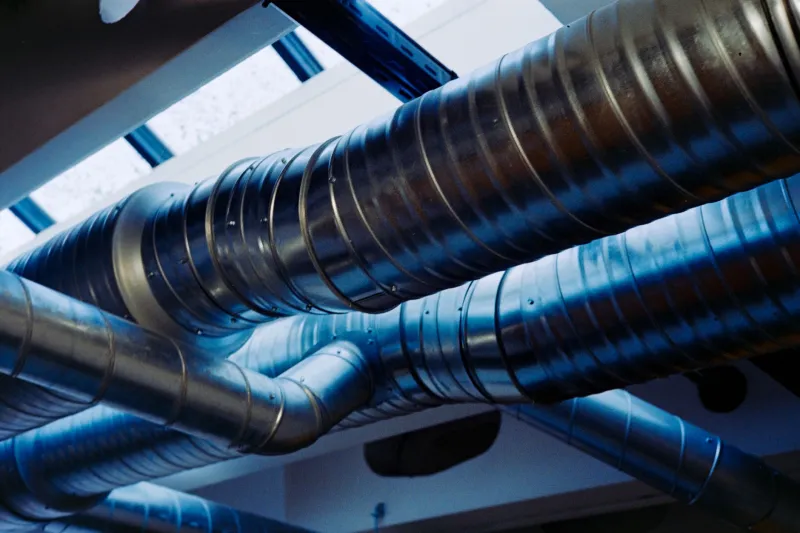
Photo: Gerald England , CC BY-SA 2.0, via Wikimedia Commons
A file, not a single number
Care homes present a particular ventilation challenge. Residents may spend long periods in communal areas and bedrooms. Occupancy can change quickly. Infection control, odour management, thermal comfort and dignity all depend on air movement that is adequate, consistent and understood by the people running the building. A CO2 meter is a useful instrument in that setting, but it is a poor substitute for a ventilation file.
The distinction is important because CO2 readings are often treated as the headline evidence that a care home has ventilation under control. A reading can be reassuring, alarming or simply ambiguous. It cannot show whether bathroom extract is working, whether a kitchen canopy is balanced, whether filters have been changed, whether grilles are blocked by furniture, or whether staff know what to do when a room becomes stuffy. Those questions are answered by records, verification and observed practice.
What CO2 can and cannot tell you
CO2 monitoring is valuable because it responds to occupancy and ventilation in a way that static design figures cannot. In a well-positioned, calibrated monitor, rising concentrations suggest that exhaled air is accumulating and that outdoor air supply may be insufficient for the number of people present. That is a useful prompt for action.
But CO2 is not a direct measure of infection risk, air distribution or local extract performance. Its reading depends on sensor placement, calibration, outdoor concentrations, room volume, door and window openings, and the number of people in the space. A bedroom with an open window may show a low reading while extract remains defective. A communal lounge may show an acceptable average while a corner seating area is poorly served. A monitor placed near a door may read very differently from one placed at breathing height near residents.
For those reasons, CO2 should sit within a wider evidence set. It is a trend indicator and a prompt for investigation, not a certificate of ventilation performance.
The core contents of a care home ventilation file
A practical file should begin with an inventory. This should list the ventilation systems serving the building, including general extract, mechanical ventilation with heat recovery where present, local bathroom and WC extract, kitchen extract, laundry extract and any supplementary systems. Schematics should show terminals, duct routes, access points, dampers and controls. The inventory should be current, because care homes are frequently altered: rooms are repurposed, partitions are added, equipment is replaced and odour problems are addressed with local fans that may not be recorded anywhere.
Next comes design intent. The file should state what each system is intended to achieve, the rooms it serves and any design occupancy assumptions. It should include commissioned airflow rates, measured at the terminals rather than copied from a drawing. Those measurements should be dated and linked to the instrument used. Where a system has been rebalanced or altered, the latest verification should supersede earlier figures and the reason for the change should be recorded.
Maintenance records form the third pillar. These should cover filter changes, grille cleaning, fan checks, belt replacement where applicable, damper adjustment and kitchen extract cleaning. They should identify who did the work and when. A generic contractor invoice is weaker evidence than a maintenance schedule with completed tasks and noted defects. The file should also show how faults were reported, how quickly they were addressed and what temporary measures were used in the meantime.
Occupancy, behaviour and the things records miss
Care home ventilation is not only an engineering matter. It is also a matter of daily practice. Staff may open windows to address warmth or odour. Doors may be propped open for movement and observation. Curtains, screens and furniture may block grilles. Portable fans may be used in ways that mix air without supplying fresh air. None of this is necessarily wrong, but it needs to be understood and recorded where it affects the ventilation strategy.
The file should therefore include an operational log. This can be simple: seasonal checks, room-use changes, complaints about stuffiness or condensation, outbreaks or periods of increased infection control measures, and any changes to window-opening practice. It should also record resident and staff feedback. Odour, condensation on windows, feeling airless and uneven temperatures are all useful signals, even when a CO2 reading looks acceptable.
A named ventilation lead can help. That person does not need to be an engineer, but they should know who to call, how to check that grilles are unobstructed, how to record a concern and what to do when a monitor shows a sustained rise. The file should include simple instructions for frontline staff, because a monitor without a response protocol is just a display.
Verification beyond the monitor
Airflow verification should be carried out by a competent person using calibrated equipment. It should cover the terminals that matter in practice: bathrooms, WCs, utility areas, kitchens, laundry rooms and communal spaces. It should confirm normal and boost operation where applicable, and it should check that replacement air can reach the rooms being extracted. In care settings, extract from bathrooms and WCs is particularly important, but it is easily undermined by closed doors, blocked louvres or fans that have been switched off because they are noisy.
Where monitors are installed, their placement and calibration should be documented. A reading taken at ceiling height in a large lounge is not directly comparable with one taken at seated breathing height in a small bedroom. Trends matter more than single snapshots, but trends are only meaningful if the sensor has been maintained and its location has not changed without note.
Inspection readiness and the test of usefulness
The strongest ventilation file is not the one with the most paperwork. It is the one that allows a manager, inspector or contractor to answer three questions quickly: what system serves this room, what evidence shows it is working, and what happens when it is not?
That means dated records, clear ownership and a visible action log. If a CO2 reading was high, the file should show what was checked and what changed. If a fan was replaced, the file should show the new measurement. If a room changed from a store to a bedroom, the file should show that the ventilation implications were considered. This is the difference between a folder that exists for inspection and a file that supports daily decisions.
CO2 monitoring has a legitimate place in care homes. It can reveal patterns that paper records miss and prompt timely action. But it cannot replace commissioning records, airflow verification, maintenance evidence or an understanding of how the building is actually used. A care home that can demonstrate all four is in a stronger position than one that can only point to a meter.