Damp Is a Symptom, Airflow Is the Evidence: A Social Housing Ventilation File
Condensation and mould are rarely solved by a damp-proof course alone. In UK social housing, the hazard is often moisture produced by everyday living — cooking, bathing, laundry and drying clothes — meeting insufficient ventilation and cold surfaces. A damp course may address rising damp; it does nothing for a bathroom extract fan that is ducted through a sagging flexible hose, or a trickle vent painted shut. The compliance question is therefore not whether a repair has been ordered, but whether the property can be shown to ventilate as designed.
The requirements associated with Awaab's Law have sharpened the focus on hazard investigation and timely remediation in social housing. The lesson for landlords is not that every damp report requires a new damp course. It is that a mould wash or a replacement extract fan without a record of performance leaves the landlord with an assertion, not evidence. In 2026, the stronger position is an evidence file: a documented trail showing that reports were assessed, systems were checked, airflow was measured where practicable, and follow-up action was completed.
Why a damp course is not a ventilation strategy
Damp-proof courses are designed to resist moisture rising through masonry. They are not designed to remove water vapour generated inside a home. When a tenant reports black mould around a window reveal or in a bathroom corner, the correct first question is not automatically about wall construction. It is whether moisture is being produced faster than it can be removed.
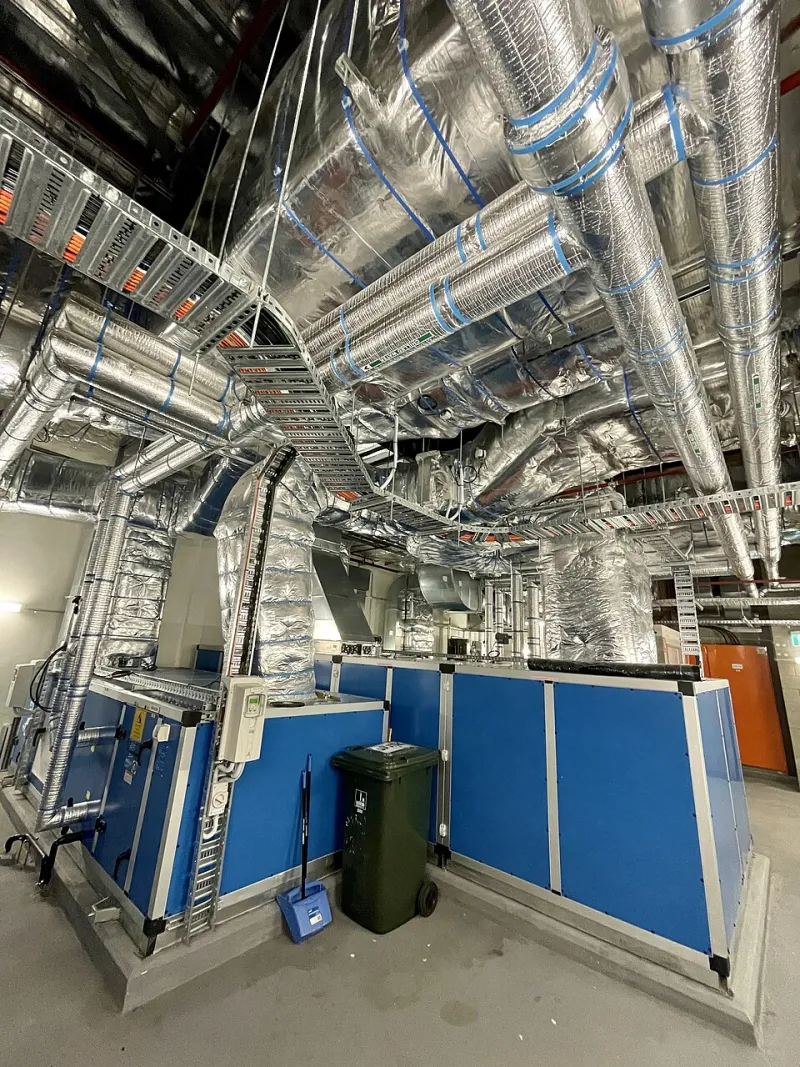
That means looking at the whole ventilation path. Is there an intermittent extract fan in the bathroom and kitchen? Does it run long enough after bathing or cooking? Is the duct continuous, insulated where required, and terminated with an open grille rather than a blocked or missing external flap? Are trickle vents present, open and unobstructed? In homes with mechanical ventilation with heat recovery, is the unit commissioned, balanced and filtered, and has anyone checked it since handover?
A reactive repair culture can replace a fan without asking why the original fan failed to control moisture. A compliance culture records the answer.
Tenant reports are data, not just tickets
A tenant report is often the earliest signal that a ventilation system is underperforming. It should be logged with enough structure to become evidence. Rather than closing a damp and mould case with a single repair code, landlords should capture the location, the suspected source of moisture, whether extract fans were working, whether vents were open, and whether the tenant had received advice on use.
Simple categorisation helps. A report of condensation on windows after cooking is different from a report of water ingress through a roof. A report that an extract fan is noisy, weak or permanently running is a ventilation performance issue, not merely a tenant complaint. When the case is closed, the record should say what was checked and what was measured, not just what was cleaned or replaced.
The reporting trail also supports fairness. Tenants should not need to understand fan curves or duct pressure to get a meaningful response. The landlord's system should translate their observations into a maintenance and ventilation check.
Commissioning records provide the baseline
Evidence-led compliance depends on a baseline. For extract fans, that means the manufacturer, model, location, design extract rate and commissioning date. It should also include the duct route, duct diameter, number of bends, external termination type and any measured airflow or pressure reading taken at commissioning or replacement.
For MVHR systems, the baseline should include the commissioning report, design airflow settings, filter specification, balanced supply and extract figures, and the date of the last filter change. A handover pack that is never updated is of limited value. The file should show the current state of the system, not only what was installed years ago.
Where measured airflow is not practical at every visit, a documented visual and functional check still has value: fan runs on boost, air can be felt at the grille, ducting is connected and supported, external terminal is clear, and controls are operable. The aim is proportionate evidence, not laboratory precision on every occasion.
Survey data and simple audit routines
A ventilation evidence file should be fed by routine surveys, not assembled only when a complaint escalates. A simple seasonal audit can cover a sample of properties or all high-risk cases. It might include an extract fan flow check using a suitable hood or anemometer, a visual inspection of ducting and external grilles, confirmation that trickle vents operate, and a short tenant questionnaire about condensation timing and ventilation use.
Photographs are useful where they show condition: dust build-up on a fan grille, a disconnected flexible duct, a blocked external terminal, or a closed trickle vent. Each item should be dated and linked to the property record. Repetitive findings should trigger a wider review of the stock, not just another individual repair.
Audit routines should also test the controls. A fan that only works when a separate light switch is found may be technically present but practically ineffective. A boost overrun set too short may leave moisture in the air after a shower. These are ventilation design and use issues, and they belong in the evidence file alongside the repair history.
A file that proves performance
The strongest file is indexed and version-controlled. It links the tenant report, the inspection, the measurement or functional check, the repair, and the post-repair verification. It records who attended and when. It distinguishes between a damp-proof course, a mould treatment and a ventilation improvement, because those are different interventions with different purposes.
Landlords should also define escalation triggers. Repeated condensation reports at the same property, a fan that fails again within a short period, or a survey finding of restricted ductwork should prompt a technical review. The file then becomes a management tool, not a filing cabinet.
Proving airflow is harder than promising it. But the evidence does not need to be complicated. It needs to be consistent, dated and specific. A damp course may have its place, but it is not a ventilation mandate. The mandate is to show that the home has been ventilated as designed — and that the landlord knows what to do when it has not.