The Sensor Is Not the System: Proving Basement Car Park Ventilation in UK Commercial Buildings
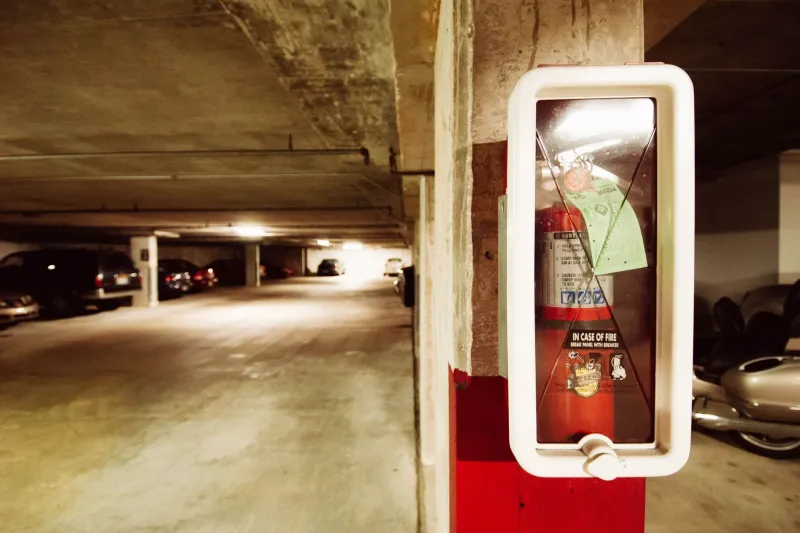
Basement and under-croft car parks occupy an awkward position in the building record. For much of the day they are treated as plant space with cars in it: unglamorous, intermittently occupied and rarely visited by anyone other than drivers. Then a carbon monoxide sensor raises an alarm, and the car park becomes a ventilation problem that must be explained, tested and documented. The difficulty is that a sensor reading on its own explains very little. It confirms that CO has been detected at a particular point, at a particular moment, under particular conditions. It does not confirm that the extract fan started, that the jet fans moved air towards the extract points, that make-up air followed the intended path, or that the discharge remained where the design intended. Those are separate claims, and each needs evidence.
Why a CO reading is only the beginning
Carbon monoxide is colourless, odourless and produced continuously by petrol and diesel engines, particularly during cold starts, queuing and manoeuvring. In an enclosed car park the ventilation system is the primary defence against accumulation. A CO monitoring system is a useful management tool, but it is not a substitute for a functioning ventilation system. The alarm or trigger point is the start of an evidence chain, not the end of it.
A defensible record should show four things. First, that the sensor was appropriately placed and calibrated. Second, that its signal reached the controller and initiated the correct response. Third, that the fans and any jet fans operated as intended. Fourth, that airflow actually occurred along the intended routes and that the extract discharged safely. Where any link in that chain is missing, the building is relying on assumption rather than proof.
Placement determines what is being measured
Sensor placement in a car park is often inherited from an older installation and rarely revisited when the layout changes. A sensor mounted high on a column near a fresh-air inlet may read reassuringly low while a queuing lane at ramp level accumulates CO. A single sensor in a large, irregular basement cannot represent every zone. The record should explain why each sensor is where it is, which areas it is intended to represent and what known limitations remain.
In practical terms, sensors should be positioned to reflect the breathing zone and the likely worst-case areas: ramp approaches, queuing lanes, turning circles, dead corners and locations where vehicles idle. They should not be placed where direct exhaust plumes, strong draughts or stagnant ceiling voids will distort the reading. Sampling points should be accessible for calibration and not liable to obstruction. The sensor schedule should include the device reference, location, mounting height, calibration date and the control action it initiates.
Jet fans, extract fans and the difference between movement and removal
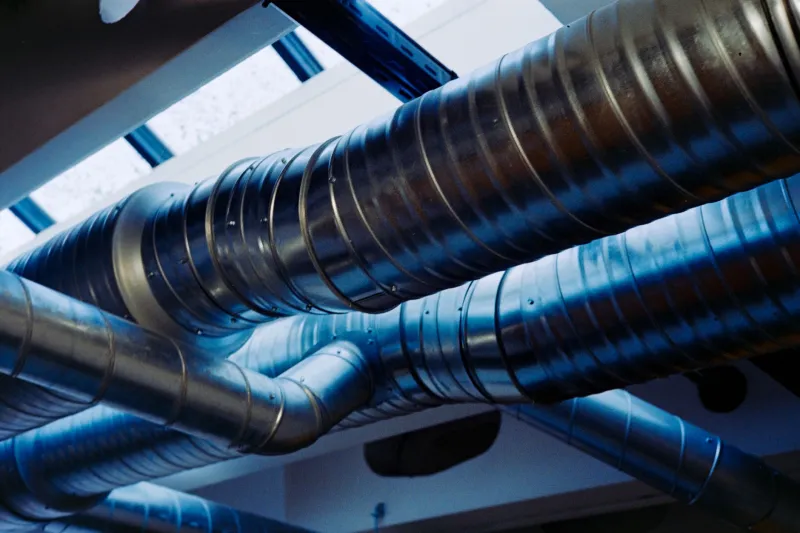
Jet fans induce air movement within the car park; extract fans remove air from it. A system can appear to run correctly while achieving very little, because the two functions are not the same. Jet fans may be running in the wrong direction, their nozzles may have been adjusted during maintenance, or the control philosophy may group them in a way that leaves a zone uncirculated. Extract fans may run but pull air from a nearby path of least resistance rather than from the occupied zone.
Evidence should therefore cover both functions. For jet fans, record the direction of thrust, the zones they serve, the control groups in which they operate and the results of any functional test. For extract, record the fan status, the measured airflow or pressure differential and the make-up air path. Where the car park relies on ramp openings or louvres for make-up air, those paths should be checked and photographed, because they are easily blocked, altered or forgotten.
Failure modes the paperwork should catch
The most common weaknesses in car park ventilation records are not dramatic failures. They are slow, ordinary ones: a sensor that has drifted, a sampling line that has become blocked, a controller left in hand, a variable-speed drive fault that has been reset without investigation, a fan belt that has slackened, a jet fan that has tripped and not been noticed because the alarm was silenced. A cause-and-effect matrix is useful here, but only if it has been verified against the installed system rather than copied from a design drawing.
Testing should include a call from each sensor group and confirmation of the correct fan response. It should also confirm that the system behaves as intended when the car park is busy, not only when it is empty. A test at midnight with no vehicles present proves that the controls can start equipment; it does not prove that the ventilation strategy works under load. Where the car park ventilation system also has a smoke clearance or fire mode, the normal CO mode and the fire mode should be tested and recorded separately, with the interfaces between them clearly described.
Building the ventilation evidence file
A useful evidence file for a basement car park is not a single certificate. It is a version-controlled set of documents that together tell a coherent story. It should include as-built schematics and a sensor schedule; calibration certificates; the CO trigger and alarm setpoints; the cause-and-effect matrix; fan and jet fan test sheets; airflow or pressure readings; records of make-up air paths; the alarm response procedure; maintenance logs; and trend data where monitoring is available. Where a fault has been found, the file should record the remedial action and the retest, not simply the closure of a job ticket.
The file should also state its own limitations. A car park ventilation system is not usually a workplace exposure monitoring regime, and a CO sensor is not a personal monitor. The record should distinguish between the control function of the installed system and any occupational exposure assessment required for staff who work in the car park. That distinction keeps the evidence honest and makes it more useful when questions are asked.
A routine that holds when the car park is full
The test of a basement car park ventilation record is not whether it looks complete in a folder. It is whether it can answer a simple question: when the car park was busy, what proved that the air was being cleared? That requires periodic functional testing, calibration, checks on make-up air paths and a review of trend data against actual use. It also requires someone to look at the system when it is under load, rather than accepting a green light on a control panel as evidence.
A CO sensor is a useful sentinel. It is not the system. The evidence lies in the chain that follows the reading: the sensor that was placed with reason, the controller that responded, the fans that moved air, the extract that removed it and the paperwork that shows the sequence was tested. For UK commercial buildings with basement or under-croft parking, that chain is the difference between a ventilation system that is assumed to work and one that can be shown to work.