Measuring the Threshold: Air Curtain Evidence for UK Commercial Entrances
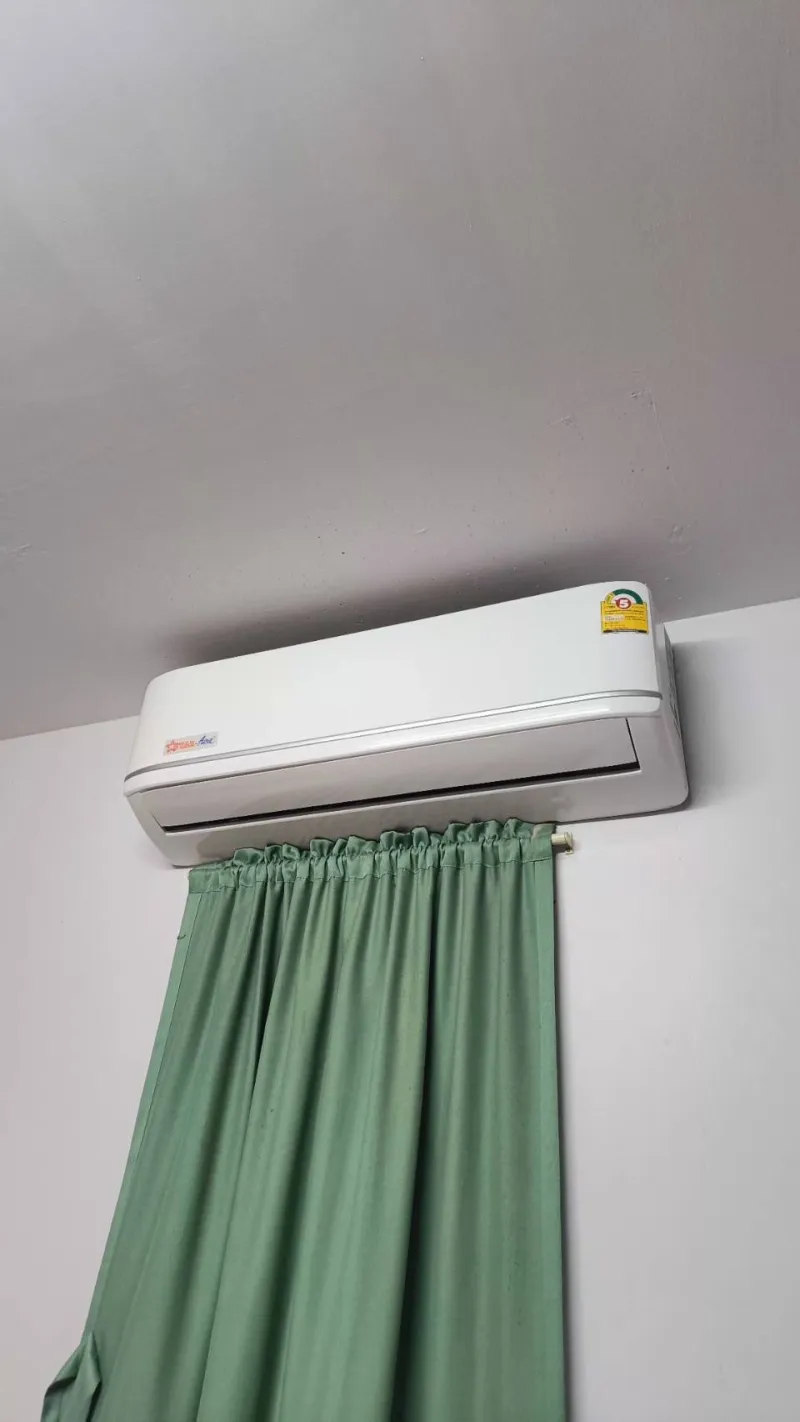
Photo: Thidapa, CC BY-SA 4.0, via Wikimedia Commons
Few building services are as familiar in daily life and as absent from the paperwork as the air curtain. Mounted above shopfronts, trade counters, loading-bay doors and commercial kitchen openings, it is often treated as a fit-and-forget accessory: a warm glow in winter, a barrier against draughts, something that either works or does not. That view is technically weak. An air curtain is a measurable airflow device. It produces a controlled jet across an opening, and its performance depends on pressure balance, doorway geometry, commissioning and the way the door is used. If it is to count as part of a building's ventilation and energy record, it must be verified with the same discipline applied to fans, ducts and extract systems.
A Barrier of Moving Air, Not a Draught Excluder
An air curtain does not seal a doorway in the way a brush strip or rubber gasket does. It creates an aerodynamic barrier: a stream of air discharged across the opening at sufficient velocity and coverage to resist the exchange of internal and external air. The device is therefore sensitive to the pressure difference across the door, to wind, to stack effect in tall buildings, and to the operation of nearby extract or supply fans. It is also not a substitute for general ventilation. An air curtain may reduce infiltration when a door is open, but it does not deliver fresh air, remove contaminants or satisfy minimum ventilation rates. Treating it as a ventilation solution is a category error; treating it as an unrecorded accessory is a compliance gap.
Start With Design Intent
The evidence file begins before the first measurement. For each air curtain, record the doorway it serves, the mounting height and width, the nozzle configuration, the design discharge angle and the intended velocity. Note the control method — manual, door-activated, time-controlled or linked to a building management system — and whether heating is provided. Record the design pressure regime: what pressure difference the unit is expected to work against, and how that figure was established. If the unit was selected to protect a shopfront from prevailing wind, say so. If it was chosen to separate a warm retail floor from a cold loading bay, record that intent. Without a written design intent, later readings have no benchmark.
Velocity, Coverage and the Threshold
Commissioning should include a velocity traverse across the nozzle and retained-velocity readings at the threshold or floor level. A single spot reading at the centre of the unit is not enough. Coverage matters: the jet must span the doorway width, with an appropriate overlap at each jamb, and remain effective at the height and distance involved. Record the instrument used, its calibration status and the conditions at the time of test. Air velocity is affected by nearby doors, temporary draughts and the operation of other plant, so note what was running. Photographs of the installation and of the measurement positions make the record repeatable. Where the unit has multiple fan speeds or automatic modulation, test the settings that will actually be used in service, not only the maximum.
Pressure Is the Other Half of the Test
An air curtain works against a pressure difference, so the pressure difference must be part of the record. Take readings across the doorway with the door closed and with it open, and note the state of adjacent extract, supply and kitchen canopy systems. In retail premises, the opening of a customer entrance can change the pressure balance; in a loading bay, vehicle movement and wind can do the same. Record the pressure regime at different times of day if the building has variable operation. A curtain that performs well under one pressure condition may fail under another. The purpose is not to demand a single number, but to show that the device has been assessed against the conditions in which it operates.
Door Use Is Part of the Performance
Air curtains are often judged on the basis of a brief test at handover. In practice, their effectiveness depends on door-use patterns that are rarely recorded: how often the door opens, how long it stays open, what passes through it and whether it is propped or held open. A pedestrian entrance with short, frequent openings presents a different duty from a loading-bay door held open for a delivery. Record observed traffic — pedestrians, trolleys, pallets, vehicles — and note any periods of prolonged opening. If the building's operation makes a curtain impractical at certain times, that should be acknowledged in the record rather than concealed by a commissioning sheet. Operational rules, such as closing doors when not in use or sequencing deliveries, belong alongside the technical data.
Maintenance Triggers and the Living Record
An air curtain is a mechanical device with filters, coils, fans, belts and controls. Its performance declines quietly: nozzles clog, filters load, belts slacken, sensors drift. The record should set maintenance triggers, not merely intervals. Seasonal checks before winter and before summer cooling loads are sensible; so are re-checks after any change to the doorway, the door furniture, the adjacent pressure regime or the building's extract strategy. A velocity re-check after cleaning or repair confirms that the unit has been restored to its design condition. Keep the commissioning data, the latest readings, the maintenance log and any photographs together. That file is what turns an invisible door into evidence.
Conclusion
Air curtains are not decorative, and they are not draught excluders. They are airflow devices whose performance can be measured, recorded and reviewed. In UK commercial premises, where entrances and loading bays are constantly in use, the difference between a working curtain and a nominal one is rarely visible from the shop floor. It is visible in the evidence file: design intent, velocity and coverage, pressure readings, door-use patterns and maintenance triggers. That is the record that makes the invisible door accountable.